
Avoiding Mistakes When Growing with Stone Wool
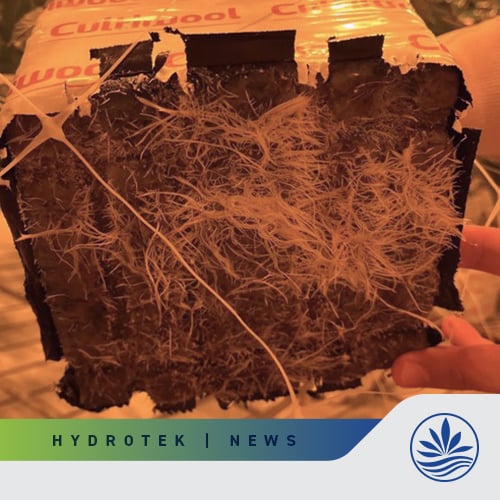
Stone wool is a powerful and precise substrate that enables growers to fine-tune plant development with unparalleled control. However, with this precision comes the need for accuracy at every step of the growing process.
At Cultiwool, they have observed how easily small mistakes can lead to significant inefficiencies or lost yields, especially in high-density, high-value crops like cannabis. Whether someone is an experienced cultivator scaling operations or just starting with stone wool, here are the five most common mistakes they notice and tips on how to avoid them.
Surprisingly, initial wet-up is one of the most frequent issues, especially in large-scale facilities. For stone wool to function optimally, it must be fully saturated with a nutrient solution (minimum EC of 1.5, pH 5.5) before use. For plugs and blocks, this can be as simple as submerging them until all visible air bubbles disappear. On a larger scale, overhead watering, whether manual or automated, is typically used.
Initial wet-up
Unfortunately, this is also where many facilities fall short, often due to inconsistent processes or equipment fatigue. Randomized spot checks of block wet weights are a valuable method to ensure uniform saturation.
For growers using blocks on slabs, a common method involves filling the slab's plastic sleeve via drippers, allowing it to soak fully before cutting drain holes. This approach reduces the need for large-scale overhead irrigation while ensuring full saturation. This can minimize the need for a larger overhead automated watering system required for larger blocks.
Dripper placement
Dripper misplacement is another common issue, particularly in large operations with multiple employees. We recommend two pressure-compensated drippers per block, each with a flow rate of 0.3–0.5 GPH. One of the most common mistakes is placing drippers too low in the block and losing the ability to properly wet up the top portion of the block. This can cause multiple different compounding issues, like a lack of root development in the top portion of the block, which can then lead to inefficient irrigation due to primary root development being lower in the block. This increase in irrigation events can lead to excessive channelling, making it very difficult to control generative growth.
Drippers should be evenly placed between the plant's base and the corner of the block. To help standardize placement and improve water distribution, Cultiwool offers the Donut Ring, which allows growers to place drippers opposite each other, eliminating the guesswork.
Substrate volume
Choosing the right substrate volume is not always straightforward; it depends on irrigation strategy, plant size, vegetative space, and more. Popular configurations in cannabis cultivation include AO plugs paired with either 6x6x6 blocks or smaller 4x4x2.5 or 4x4x4 blocks on slabs. We also have growers that use the 6x6x4 and even 4x4x4 for a full production cycle.
A frequent misconception is that increasing substrate volume will solve issues with water retention. While it may offer a larger buffer, too much volume can reduce the grower's ability to steer the crop. Conversely, too little substrate may require frequent irrigations, which can unintentionally push plants into a more vegetative state. Remember: every irrigation event is a vegetative signal.
Smaller blocks (e.g., 4x4x4) can be used successfully in high-density grows with compact plants and short veg times, but they offer little margin for error and require careful moisture monitoring. Larger volumes may offer peace of mind, but they offer less precision and control. Many factors must be considered when deciding on which volume of substrate is best for your operation and business.
Dry-back strategy
Dry-backs are a crucial tool for root development and crop steering. First, it is important to understand that when your overall water content in the block is lower, your EC will increase. Early-stage dry-backs encourage roots to search for moisture, resulting in a healthier, robust root system. Overwatering at this stage creates "lazy roots" and increases the risk of pathogens such as Fusarium.
Dry-backs are also useful for promoting secondary metabolite production later in the crop's cycle. Sensors play a key role in measuring how far to push a dry-back, but sensor placement (covered in the next section) is critical. We recommend a maximum dry-back of 50% to maintain stone wool's wet-back ability and performance while pushing it a bit lower in the last week or two of flowering. Keep in mind, a ±10% variability is considered standard in blocks and drippers, which is why consistency is essential for reliable crop steering.
Sensor placement
Sensors can be incredibly helpful, but only when used correctly. One of the most common errors is placing them too low in the substrate. Since gravity keeps the bottom of the block wetter for longer, this can lead to inaccurate readings that do not reflect the top zone's moisture. In turn, growers may overcompensate with extra irrigation during the wet-up period, causing once again excessive channeling.
It is important to remember that a sensor provides a snapshot of a specific part of the block, not a full representation of the root zone as a whole. For more representative data, use multiple sensors across blocks and ensure consistent insertion depth and orientation. Proper sensor placement helps ensure you are making decisions based on real, actionable data.