
Getting the Most Out of Stone Wool Based Cultivation
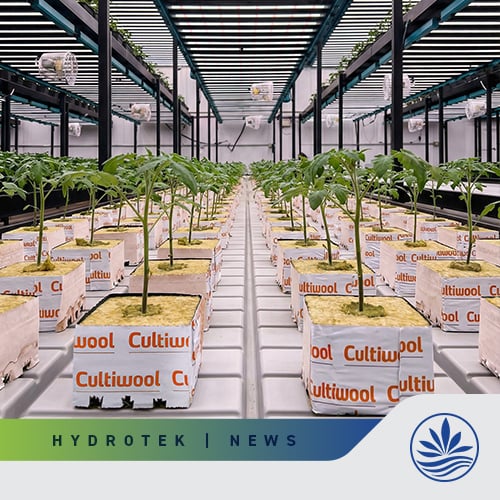
Stone wool has become the preferred substrate for precision cultivation, offering growers unparalleled control over water, nutrients, and oxygen availability at the root zone.
As controlled environment agriculture (CEA) advances, one of the most impactful strategies growers can adopt is crop steering. That is a data-driven approach to adjusting environmental and nutritional inputs to guide plant development toward desired outcomes. Whether targeting higher biomass, increased yield, or enhanced quality (such as flavor or cannabinoid concentration), crop steering techniques can transform results in both medicinal and food crop production.
This article explores advanced nutrient and crop steering strategies tailored to stone wool systems, providing practical insights for growers seeking to elevate their cultivation practices. Please note that throughout the article, you can find links to previous publications for more in-depth information. Keep in mind that crop steering must be monitored very closely, as all the techniques are based on optimal conditions. Once a limiting factor is determined, the grower must make adjustments accordingly.
What is crop steering?
Crop steering is the practice of manipulating environmental and nutritional parameters to direct plant growth phases. In essence, growers can encourage either vegetative growth (more leaves, stems, and root mass) or generative growth (flower, fruit, or head development) by fine-tuning nutrient concentrations, irrigation frequencies and dry-back levels, light quantity (PPFD), quality (spectrum), and duration (photoperiod), and temperature and humidity balance (VPD).
When performed with precision, crop steering ensures plants allocate energy toward the desired growth goal without compromising overall health.
Nutrient strategies for crop steering in stone wool
Electrical conductivity (EC) management is central to crop steering. For vegetative steering, maintaining lower EC levels promotes root uptake, lush foliage, and rapid vegetative growth. In contrast, generative steering relies on increasing EC in the root zone to create mild osmotic stress, which encourages plants to shift toward flowering or fruiting. This approach reduces internodal spacing and supports higher secondary metabolite production toward the end of the flowering cycle.
Nitrogen ratios also play a key role. Higher concentrations of nitrate nitrogen (NO³) stimulate vegetative growth, while balanced or slightly reduced nitrogen in favor of potassium (K) and phosphorus (P) supports generative phases. Although phosphorus is typically applied later in flowering to increase flower mass, growers may also use it at the onset of flowering during generative steering to limit initial internodal stretching.
Magnesium, calcium, and micronutrients must be carefully managed as well. Adequate calcium strengthens cell walls, which is essential during rapid generative growth. Magnesium contributes to photosynthetic efficiency and requires close monitoring, particularly under high-intensity lighting conditions.
Irrigation and dry-back techniques
Stone wool's precision and uniformity make it well suited for crop steering through irrigation strategies. During vegetative steering, short and frequent irrigations with run-off help keep water content (WC) stable and electrical conductivity (EC) lower. This supports consistent moisture in the substrate and encourages vigorous vegetative growth.
For generative steering, controlled dry-backs are introduced to reduce WC and raise EC, signaling the plant to shift resources toward generative growth. A common method used in this phase is EC stacking, which is achieved by eliminating run-off and allowing EC levels to rise in the substrate. This controlled stress encourages stronger generative development.
Monitoring WC, EC, and pH at multiple depths within the slab provides critical insights into root-zone dynamics. With this information, growers can adjust irrigation strategies more precisely and with greater confidence.
Environmental steering synergies
Nutrients and irrigation work best when combined with environmental steering. Below are some general points of attention:
- Temperature & VPD: Day and night temperature differentials can also be used to enhance both vegetative and generative steering.
- Light Strategies: Blue spectrum light supports vegetative growth, while red/far-red promotes flowering and biomass allocation. Photoperiod and light intensity can also play an important role especially in a greenhouse environment and utilizing supplemental lighting.
- CO2 Enrichment: More impactful during high-light, generative phases when plants are maximizing photosynthetic capacity.
Practical example: Tomato and cannabis steering
In tomato production, steering toward fruit development is achieved by reducing irrigation frequency, increasing electrical conductivity (EC), and maintaining higher potassium-to-calcium (K:Ca) ratios during the flowering phase. These adjustments direct plant energy away from vegetative growth and toward consistent fruit set and sizing.
In cannabis cultivation, generative steering is applied through elevated EC, reduced nitrogen levels, and careful dry-back management. When combined with a lower vapor pressure deficit (VPD), these strategies enhance flower density and support higher cannabinoid expression.